

UVSOR Synchrotron Facility Overview

Create Light, Capture Insight
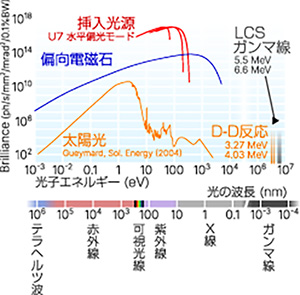
Bright, specialized light is required to observe atoms, molecules, and materials. Sunlight, the most familiar bright light, contains the seven colors of the rainbow as well as ultraviolet (UV) light, which causes sunburn, and infrared light, which produces heat. UV light has higher energy than visible light, whereas infrared light has lower energy. Solar radiation also includes X-rays, gamma rays, terahertz radiation, and microwaves. The UVSOR facility provides synchrotron radiation that is 1,000‒1,000,000 times brighter than sunlight in outer space and delivers light through various beamlines to meet users’ needs. While sunlight is brightest in the green (2 eV region in the viewgraph), synchrotron radiation from UVSOR shows its highest intensity in the approximately 10‒1,000 eV range. Radiation in this energy range interacts strongly with matter and is widely used to investigate the origins of various material properties across fields ranging from the life sciences to astronomy. Moreover, by leveraging the flexibility of a compact facility, research on the synchrotron machine is being conducted, which is a distinctive feature of UVSOR. Studies on generating new forms of light, such as vortex light, and their applications in materials science are also underway.
UVSOR-III Synchrotron
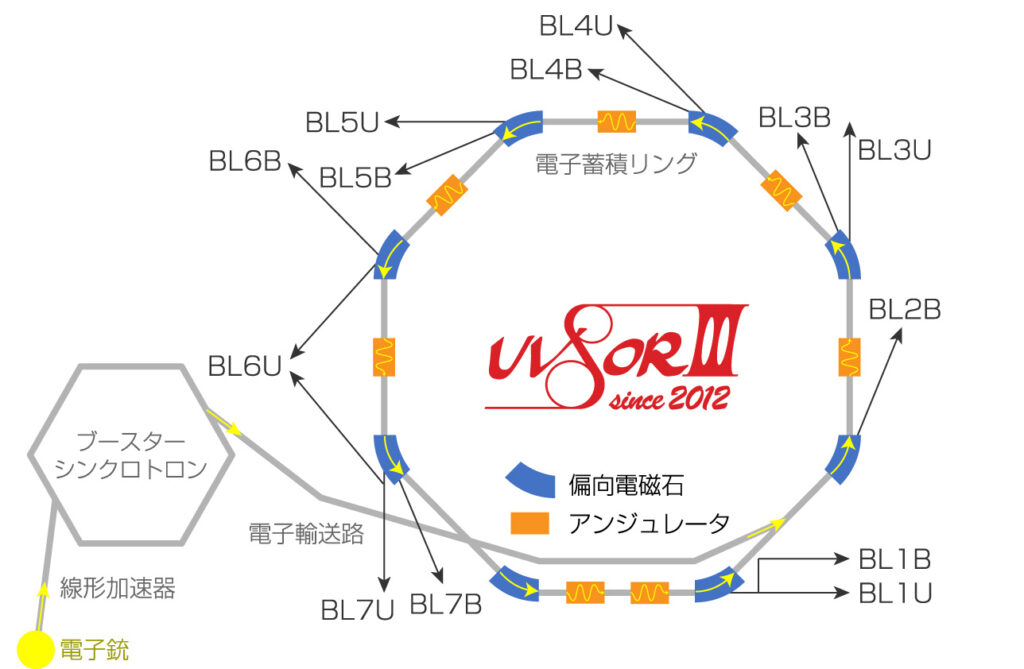
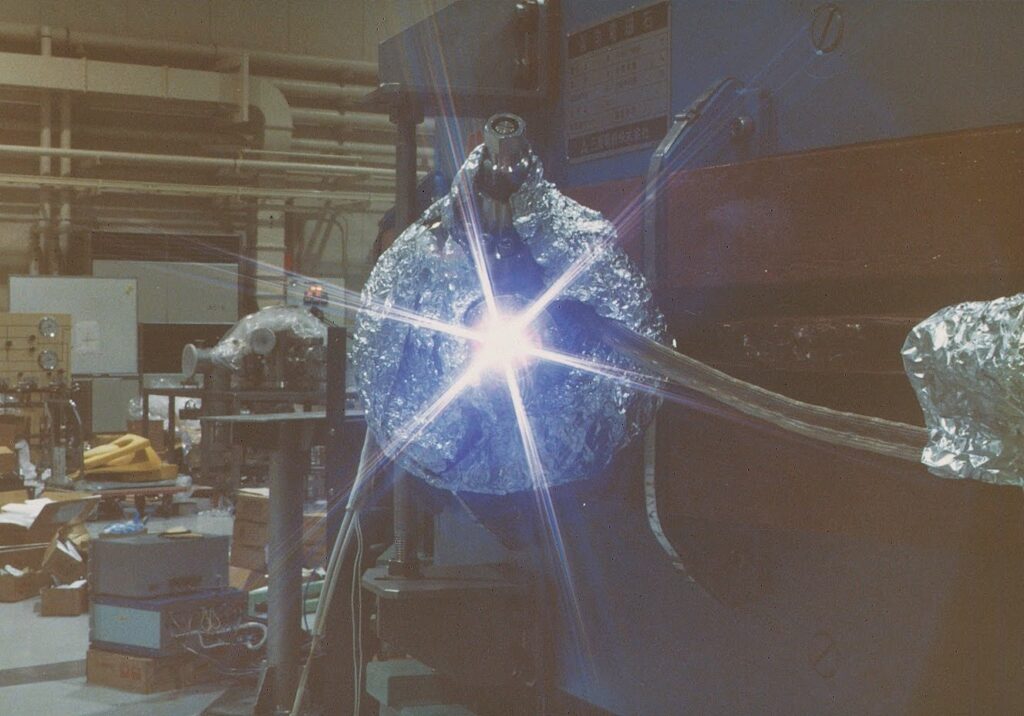
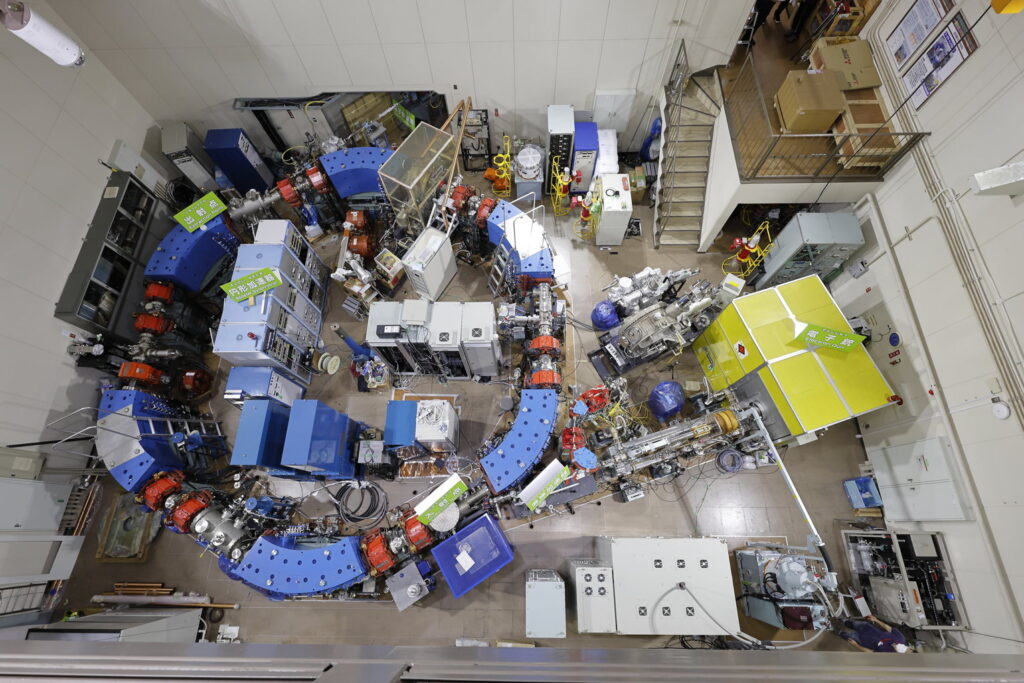
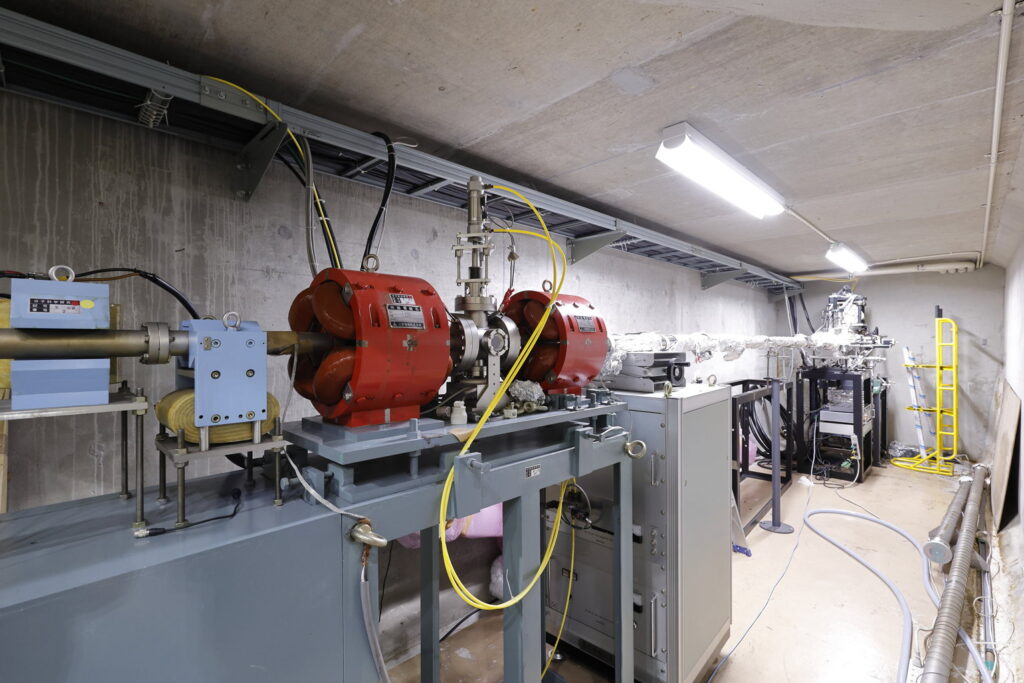
UVSOR-III is an accelerator complex comprising a 53-meter electron storage ring for light generation and an injector (electron gun, linear accelerator, and booster synchrotron) that injects electrons accelerated to nearly the speed of light into the storage ring. Although UVSOR was constructed over 40 years ago, it underwent major upgrades in 2003 (UVSOR-II) and 2012 (UVSOR-III). By actively incorporating new technologies, the facility maintains world-class performance as a compact, low-energy synchrotron light source. Looking ahead, the UVSOR-IV conceptual design has been proposed to develop a new type of light source aimed at revolutionizing the life sciences, and efforts toward its realization are ongoing.
Generation of Synchrotron Radiation and Energy (Color) Selection via Beamlines (BL)
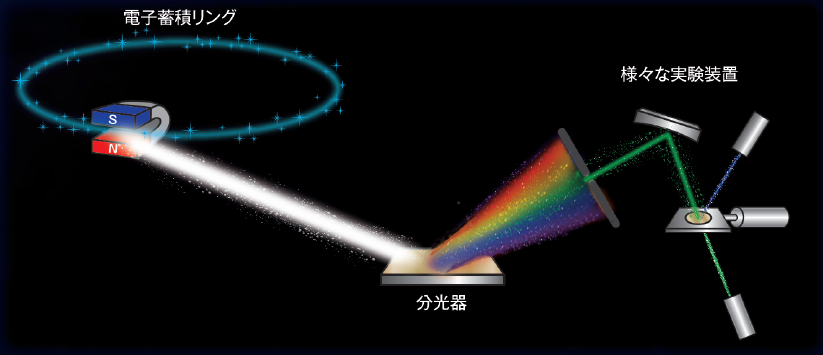
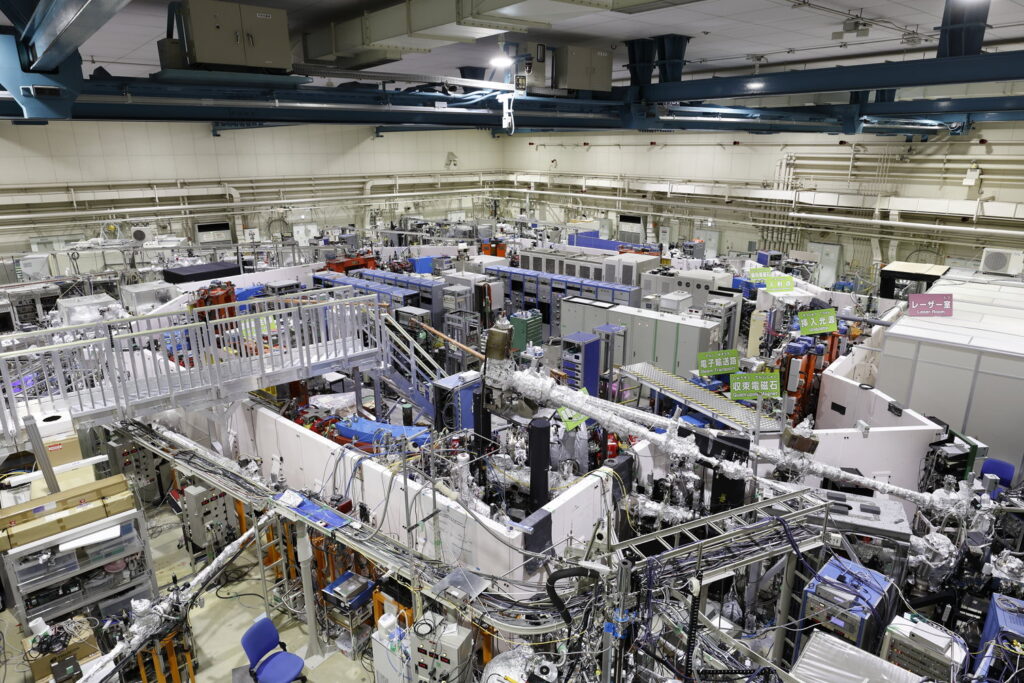
Electrons circulate at nearly the speed of light within an octagonal electron storage ring. At each vertex of the octagon, bending electromagnets deflect the electrons, generating highly intense light. Additionally, six of the eight straight sections contain devices called “undulators,” which comprise many small magnets arranged in a specific pattern. As electrons pass through these undulators, even more intense light is generated. The emitted light is then filtered by “spectrometers” installed along 13 beamlines (BL1U, 1B, 2A, …, 7U, 7B), as shown in the diagram below. Only the required light is selected and supplied to the experimental apparatus, called “endstations,” connected to each BL.
Experiments Utilizing Light at Endstations
Light from each beamline is directed to the endstation, where various experiments explore the structure, mechanisms, and functions of materials and molecules. UVSOR endstations are widely accessible to academic researchers and industrial users, both domestically and internationally, and support research and development in fields such as molecular science. Detailed information and experimental results for each UVSOR beamline are available online.